
Winchester House

Styles Façade Solutions® (formerly Thomann-Hanry®) was instructed to remove a decade of grime and biofilm from Winchester House in a demanding London limestone facade cleaning project.
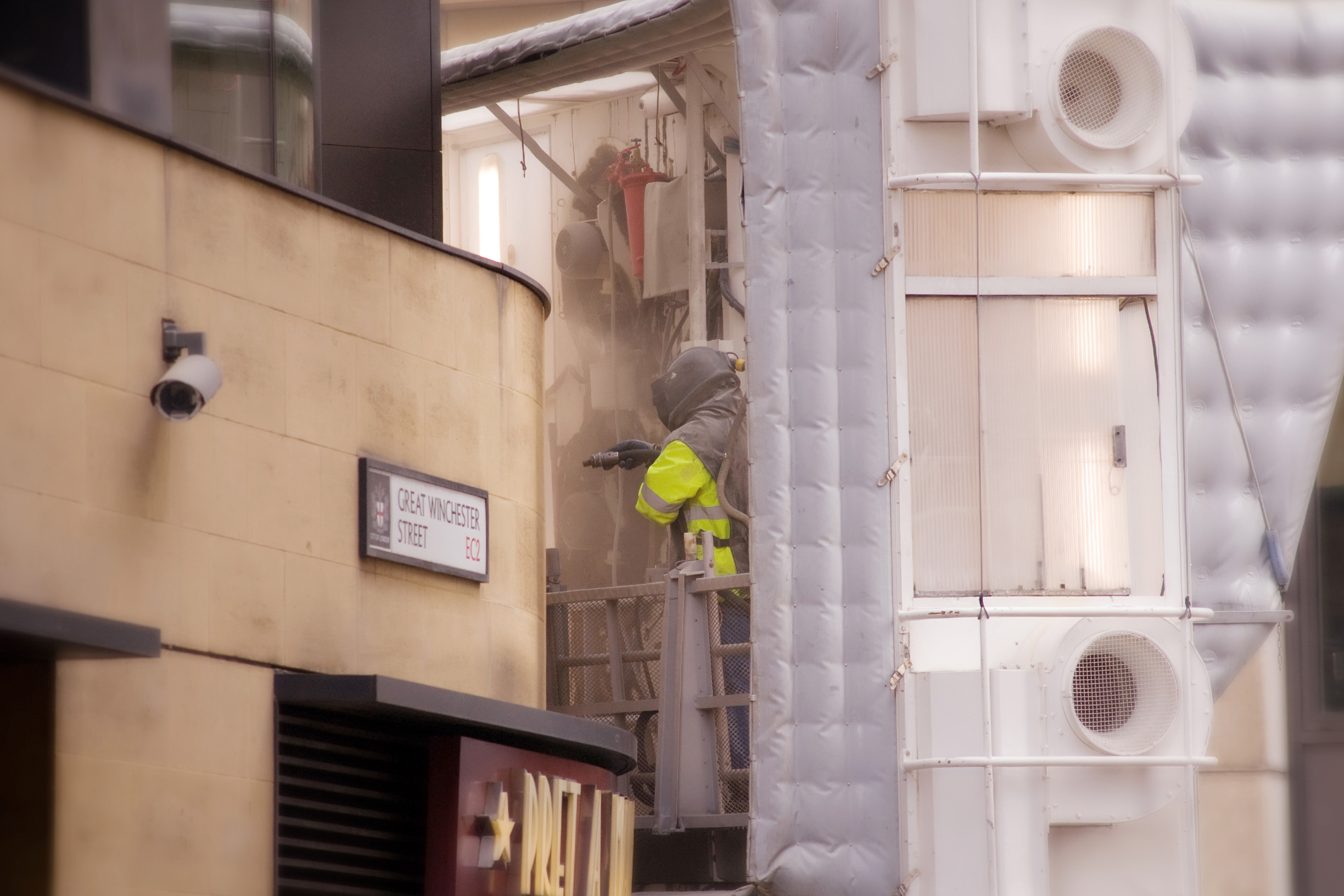
With scaffold-free Façade Gommage, ultra-fine aluminium silicate particles gently lifted dirt from the porous stone, while a lorry-mounted cleaning cabin captured the residue for recycling into road aggregate.
Working on Friday, Saturday and Sunday evenings over five weekends, the team left no trace by Monday morning, revealing the gleaming, warm-toned limestone beneath and saving the client more than £50,000.
Solutions provided
BANKING ON A CLEAN FAÇADE IN THE CITY
On a site beside the original Roman London Wall, an order of Augustinian friars founded their friary in 1253, bringing the religious ideals of their order to an urban setting. Following Henry VIII’s Dissolution of the Monasteries in 1539, the land was purchased by William Paulet, later the 1st Marquess of Winchester, who built a grand Tudor mansion, Paulet House, which later became known as Winchester House.
After years of gradual redevelopment of the grounds, the Tudor Winchester House was finally demolished in 1839, and a new Winchester House, designed by Frederick Thomas Pilkington, was built in its place. In 1965, for the second time in the site’s history, the Victorian Winchester House was demolished, and work began on a new 22-storey modernist office block. The third Winchester House opened in 1968 to critical derision as an uninspired and anonymous building. The Bishopsgate bombing in April 1993 caused significant structural damage to the building and, as a result, it was demolished.
With the basement footprint and foundation piles retained, a new 10–14-storey groundscraper was designed by architect David Walker as Deutsche Bank’s main London offices. Its 44,600 m² of internal floor space contains expansive trading floors, meeting rooms and executive suites. The fourth Winchester House was completed in 1998, and by 1999 the bank had consolidated its London operations there.
Tight security, no scaffolding, no disruption
After a decade of accumulated dirt, grime and biofilm, the French limestone façade needed a full clean across all elevations, and Styles Façade Solutions® was instructed to carry out the work. With significant security concerns and a need to work outside standard office hours, our ability to clean without erecting expensive, time-consuming and intrusive scaffolding made us ideally suited to this London limestone facade cleaning project.
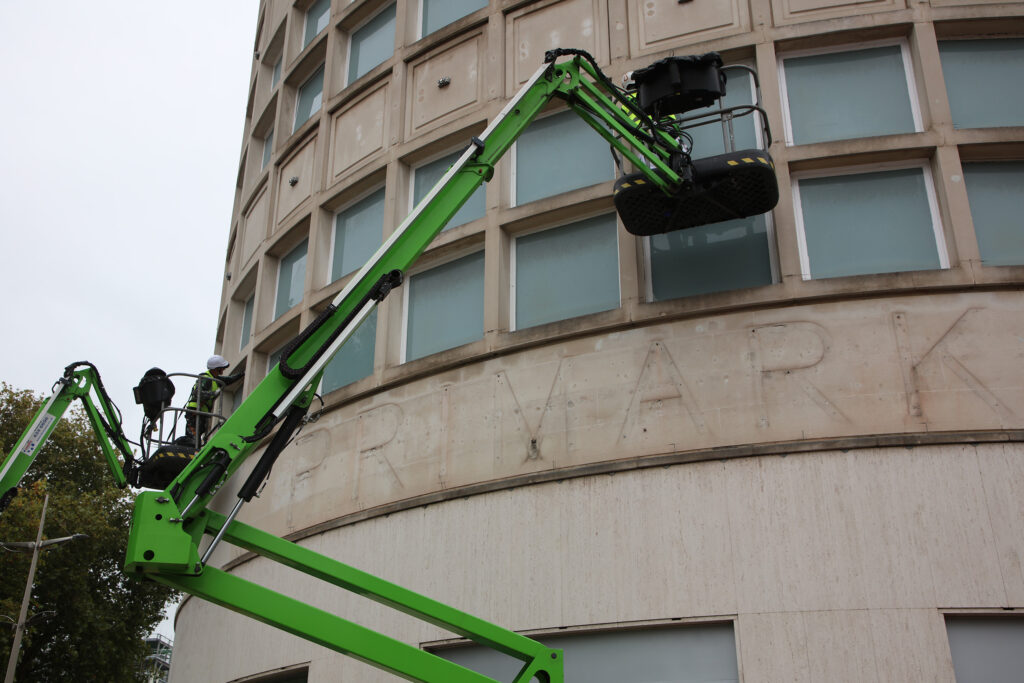
To avoid disturbing the Bank, its staff and the wider business community in this prominent City of London location, it was decided that works would take place on Friday, Saturday and Sunday evenings over five consecutive weekends. This meant there would be no sign of any work when the office opened at 07.00 each Monday. Because the Façade Gommage cleaning process is carried out from a self-contained cleaning cabin attached to a lorry-mounted boom, all equipment could be removed from site at the end of each shift.
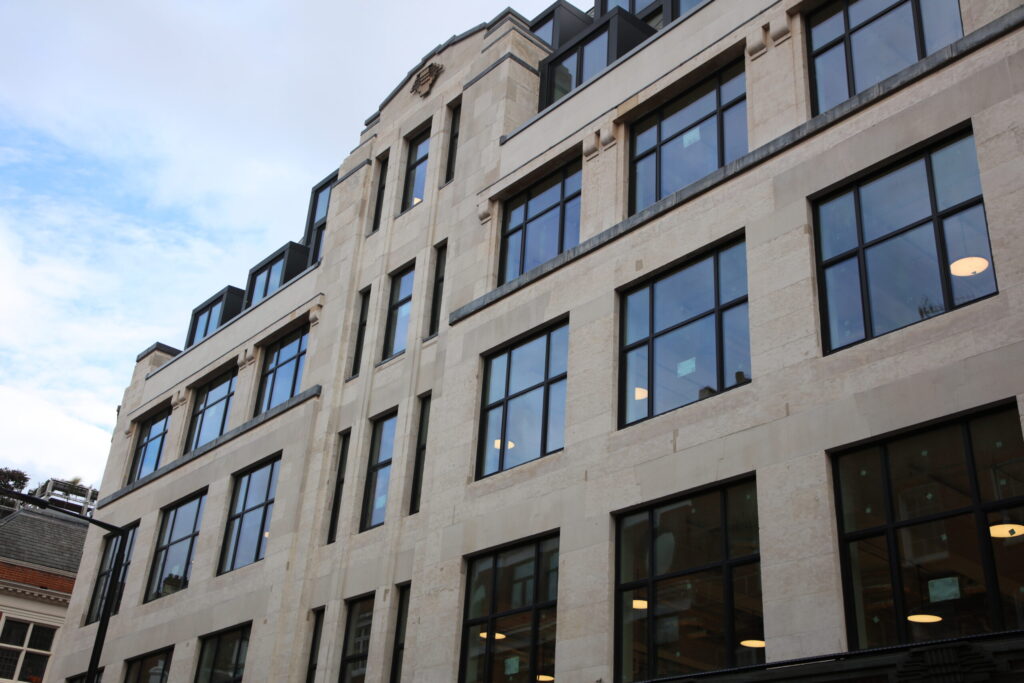
The French-quarried Buxy limestone is a durable façade material with a warm yellow tone. Like most limestones, however, it is porous, so the wrong cleaning method can push surface soiling deeper into the stone, causing marking and discolouration that are far harder to resolve.
Five weekends, zero disruption, over £50,000 saved
The Façade Gommage cleaning process gently erases dirt and grime from the façade using ultra-fine particles of aluminium silicate, which are blown across the surface at a pressure of 4 bar. The dirty powder is then vacuumed back into the cleaning cabin, where it is trapped in a water curtain. This Gommage slurry is pumped down to a separation tank, where the solids are removed and returned to the Styles Façade Solutions® yard in Park Royal for recycling into road aggregate. The water is sent back to the cleaning cabin to be reused.
The clean revealed the warm-toned Buxy limestone in its full glory which is why experience matters in London limestone facade cleaning.. The project was completed in only 14 evenings over five weekends and saved the client more than £50,000 in overall costs.
See the links below for more examples of the results Styles Façade Solutions® can deliver for your business.
Call our team TODAY on +44 (0) 20 8453 1494, alternatively use the contact us form for a FREE project quote or for more information on how Styles Façade Solutions® (formerly Thomann-Hanry®) can help your commercial or heritage property.
Start a conversation
For commercial and heritage buildings only — tell us about your project and we will respond within one working day.