

How to clean façades
Façade refurbishment and restoration projects are complex undertakings. All too often, timescales and budgets overrun due to a lack of knowledge about how to clean facades and the confusing array of available solutions.
Choosing the process that best suits your needs is fraught with uncertainty; trying to balance cleaning material compatibility and business demands with considerations of access, containment of materials, site security and potential disruption. Get it wrong, and you may cause irreversible damage to the building’s fabric.
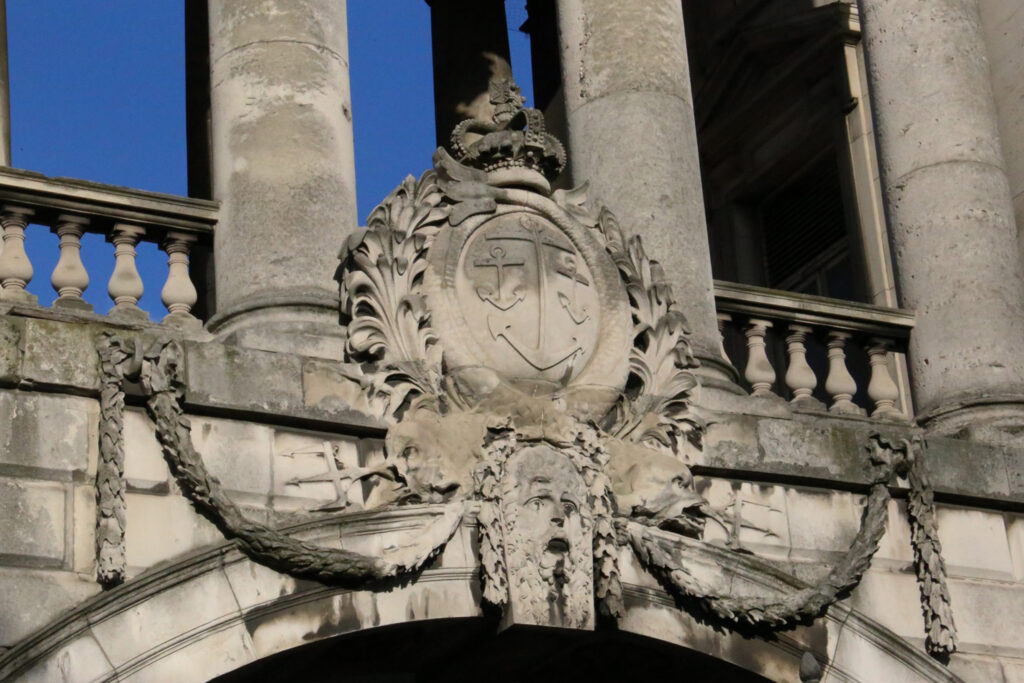
Styles Façade Solutions® demonstrates the value of expert intervention: carved stonework at Somerset House and Shoreditch Town Hall, weathered by decades of soiling and biological growth, illustrates how delayed cleaning risks irreversible damage—reinforcing why correctly researched, professionally applied cleaning techniques are essential to preserving heritage façades for future generations.
THE IMPORTANCE OF MASONRY MAINTENANCE
Stone is often thought to be timeless. While it survives for millennia underground in the heat and pressure that created it, once brought to the surface, it comes under attack from the elements and is subject to environmental decay. It is therefore a material that needs to be protected and maintained, rather than assumed to be permanent.
Nevertheless, there is often a debate regarding whether a dirty or weathered veneer is in equilibrium with the environment and should be left undisturbed. However, experience shows that much of the negativity surrounding the cleaning of natural stone façades stems from poor research and improper cleaning technique selection. If cleaning is delayed or not performed at all, the stone may suffer irreversible damage.
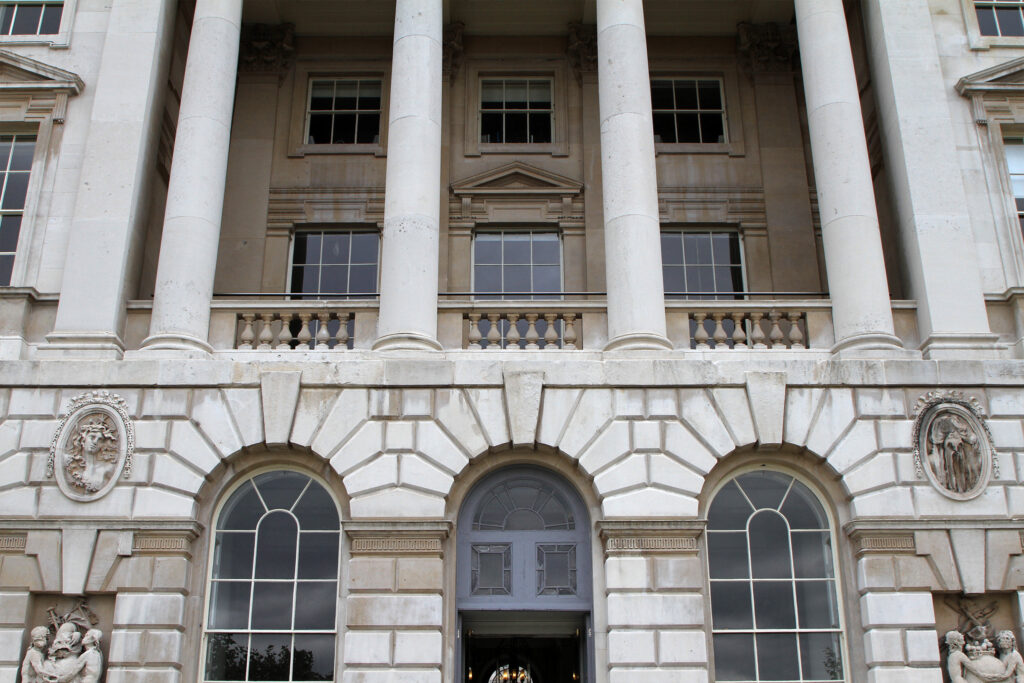
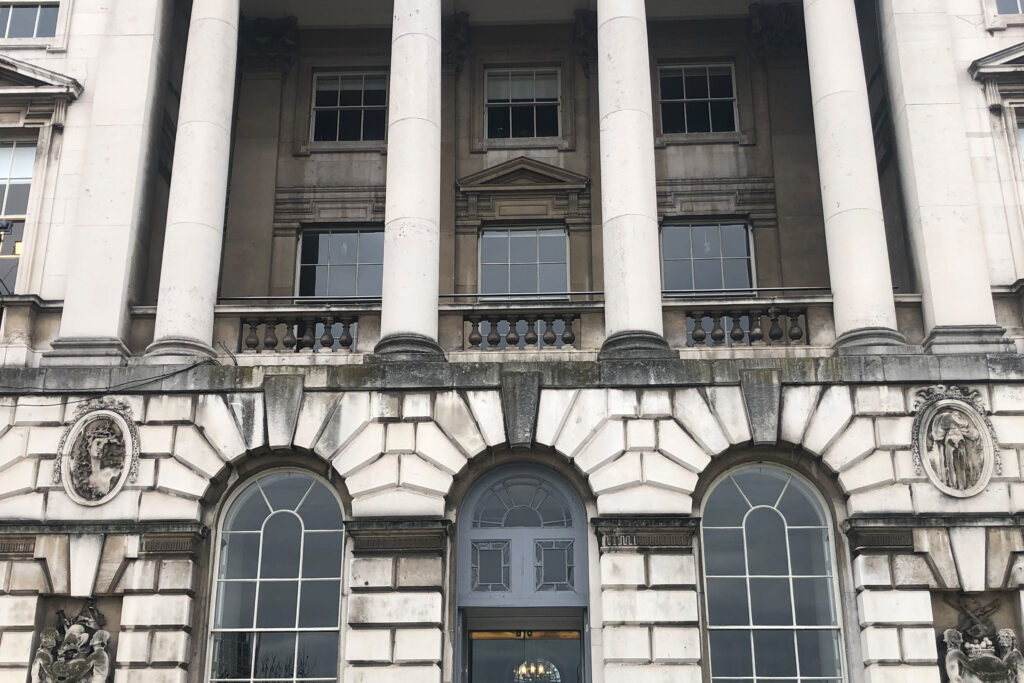
HIDDEN AREAS OF CONCERN REVEALED
The primary concern is to prevent dirt build-up, principally from airborne particulates. These deposits often contain a range of chemically reactive materials that accelerate the breakdown of the stone and reduces its lifespan.
Damp areas are particularly likely to attract dirt – especially in a wet climate. Thick layers of grime act as a ‘sponge,’ retaining water against or within the masonry. This results in increased salt cycling – a process where salt crystals expand and contract within the pores of the stone, causing the surface to spall or crumble. and accelerating deterioration in the stonework.
Proactive maintenance, such as the removal of invasive of a seedling, for example, prevents significant structural disturbance caused by root growth within the masonry. Furthermore, heavy dirt and staining can obscure evidence of structural failures that could eventually lead to loose architecture or failing fixings, resulting in serious hazards such as masonry falling onto public walkways.
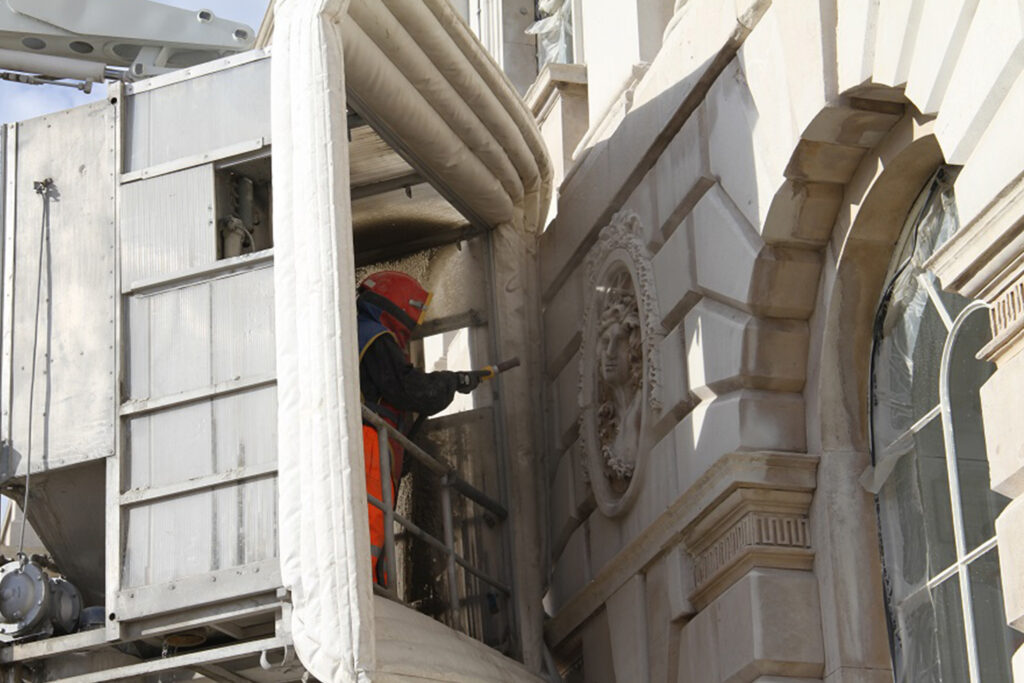
PREVENTION OF LONG-TERM DAMAGE
Understanding how to clean façades properly through regular professional cleaning will help to identify areas where there is above-average build-up of dirt and salts, that may be indicative of more far-reaching problems which, if rectified at an early stage, will have considerable cost-benefit in the longer term.
Call our team TODAY on +44 (0) 20 8453 1494, alternatively use the contact us form for a FREE project quote or for more information on how the Façade Gommage scaffold-free cleaning process from Styles Façade Solutions® (formerly Thomann-Hanry®) can safeguard your commercial or heritage property.