
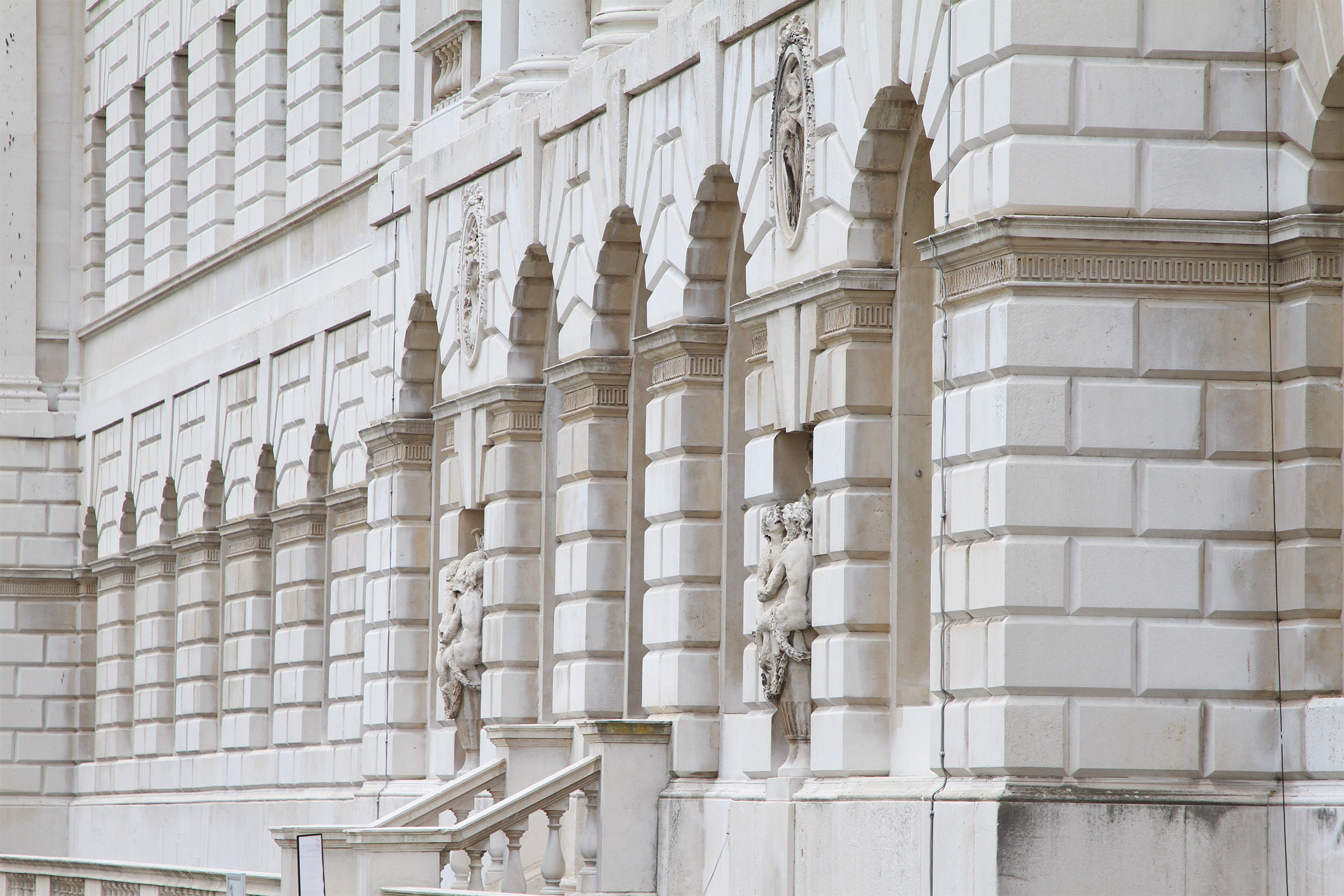
Portland stone: The stone at the heart of London
Portland stone is one of the key building materials used to clad some of the most important buildings across the capital. It comes in several hues, from a warm creamy white, through to a sophisticated dark grey rich in fossils. Famed for its quality and tight, compacted nature, it is an ideal stone for intricate ornamental carving and grand architectural cladding, though its prominence on London’s landmark buildings means specialist stone cleaning services are often needed to preserve its appearance over time.
Widely used across London and beyond, with quarrying for this famed material dating as far back as second century CE, it’s time that we delve deeper into this key construction material. Looking at how best to maintain it and keep it looking its best.
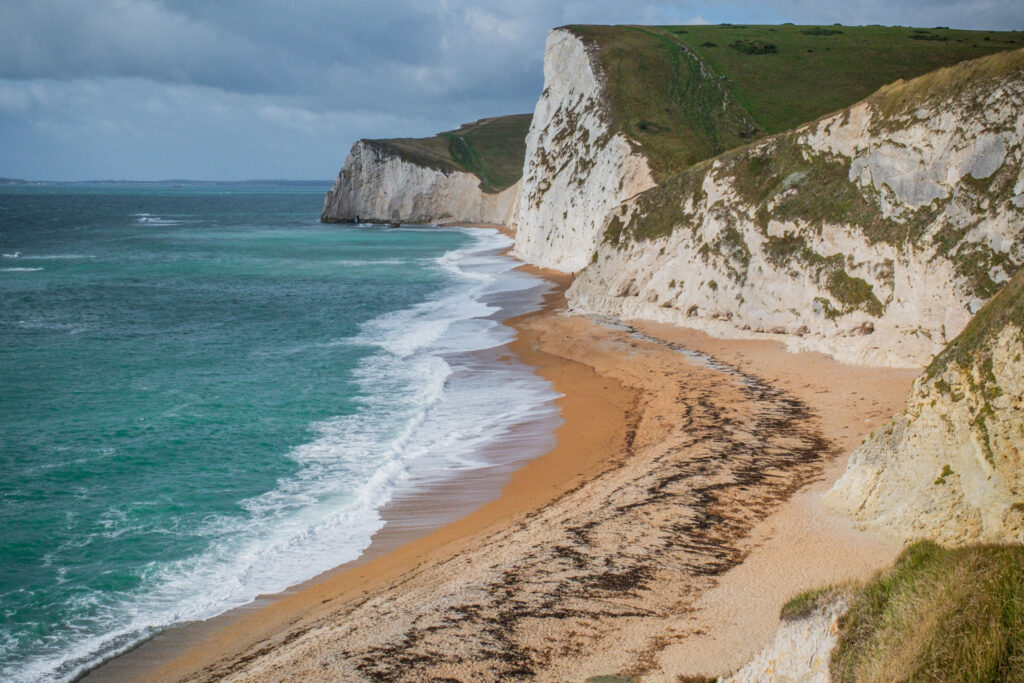
The Jurassic Coast, a UNESCO World Heritage Site spanning 95 miles of Dorset and East Devon coastline, reveals 185 million years of geological history through its layered cliffs. These formations, source of the famous Portland stone used throughout London, remain a globally significant record of Earth's past.
THE GEOLOGY
The story of Portland stone begins in the warm shallow sub-tropical seas of the Late Tithonian Age of the Late Jurassic Period (approximately 142 to 149 million years ago). These waters were home to a vast array of marine life, evidenced by the macro and micro-shelled fossils found throughout the 75 metres of the Portland formation.
The stone is made up of tiny (less than 0.5 mm in diameter) calcite (a calcium carbonate mineral) egg-shaped spheres (ooliths) which have been formed on the sea floor from a calcite-rich mud (micrite) and a fragment of shell or other debris, which then acts as a nucleus for accretion of the mineral around it. Over time, these ooliths cement together as more calcite is deposited around them. Then, through the process of burial and the addition of pressure and heat, it turns what was a muddy carbonate-rich silt into a durable limestone.
Portland stone, which is most used for masonry, comes from quarries on the Isle of Portland in Dorset (it’s named after the location where the rock was first described). These quarries have been worked for many years and contain deposits of various types, including significant fossil deposits of gastropod and bivalve shells.
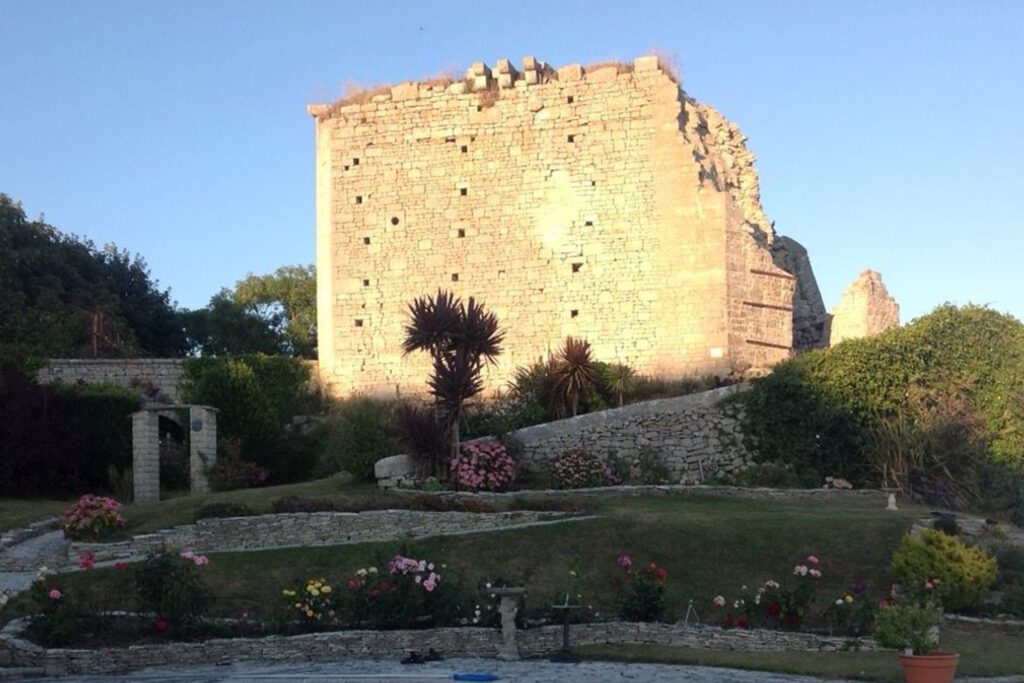
Rufus Castle, dating from the 15th century, replaced an earlier fortification reputedly built for William Rufus. This ruined stronghold overlooking Church Ope Cove reflects Portland's strategic coastal importance and rich stone quarrying heritage, remaining a striking historic landmark amid the island's picturesque gardens. Photo Credit: Artefax CC BY-SA 4.0
THE HISTORY
With a history of use going back to the early 2nd Century CE, the stone has been found in Roman burial sites in Dorset. Many well-crafted Roman sarcophagi (intricate stone coffins with matching lids) have been hewn from a single large block of Portland stone.
The first known large-scale building made from Portland stone is Rufus Castle at Church Ope Cove, Dorset. First built in 1080, then rebuilt in 1259 and 1450, it is now a Grade I listed building and a scheduled monument. The real growth with the use of Portland stone as a London masonry staple came with the building of the Palace of Westminster in 1349 and the first stone of London Bridge in 1350.
However, after the Great Fire of London in 1666, Sir Christopher Wren FRS used almost 1,000,000 cubic feet (or 28,500 m3) of Portland Stone to rebuild St Paul’s Cathedral and other minor churches, and it was this widespread use of Portland stone which cemented it as the building material for London. Other landmarks made using Portland stone include The British Museum, Somerset House, The General Post Office, Bank of England, Mansion House, and even Tower Bridge, which is partly clad in Portland stone.
But it's not just in London where you can find imposing Portland stone buildings. Manchester has St. James Buildings and Manchester Central Library; Liverpool has the Cunard Building and the Port of Liverpool Building; and Exeter Cathedral and Christchurch Priory are all constructed or clad with this key building material. Outside the UK, the UN building in New York, the Houses of Parliament in Dublin, and the Auckland Museum in New Zealand are all constructed from Portland stone.
In 2016, Portland stone was designated by the International Union of Geological Sciences as a Global Heritage Stone Resource.
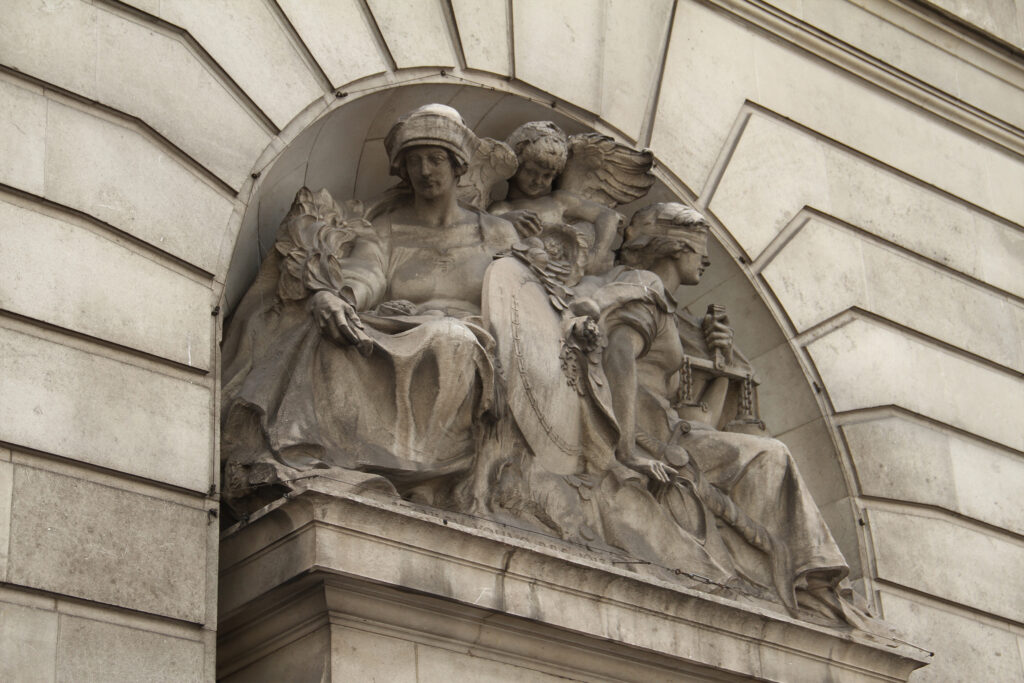
Dirty, pollution-stained Portland stone like this can significantly diminish a building's visual appeal, obscuring intricate carved details and giving even grand architecture a neglected, tired appearance. Regular façade cleaning helps restore the stone's original brightness, protecting both its aesthetic value and the property's overall impression.
MAINTENANCE AND CLEANING
As with any building façade, a regular, scheduled maintenance and cleaning plan is vital in keeping the building (and the materials which it is made from) looking its best. In the case of Portland stone, due to the chemical make-up of the material and its naturally light colour, it is susceptible to the wear and tear of modern city life and environmental degradation (such as carbon build-up, traffic particulates, and rain).
If a biofilm build-up has occurred, a topical treatment to kill off algae and bacteria will be needed, as these organisms can penetrate deep into the stone's surface. If the period between cleaning is left too long, permanent staining of the stone can occur, which can also result in physical degradation of the stone, leading to cracking, chipping, and possibly structural decay.
As the stone is slightly porous, surface dirt and grime can be ‘pushed’ further into the stone's matrix if unsuitable high-pressure cleaning is used. For best results, a low-pressure, non-abrasive, chemical-free stone cleaning services should be used to ensure the continued health of the Portland stone façade.
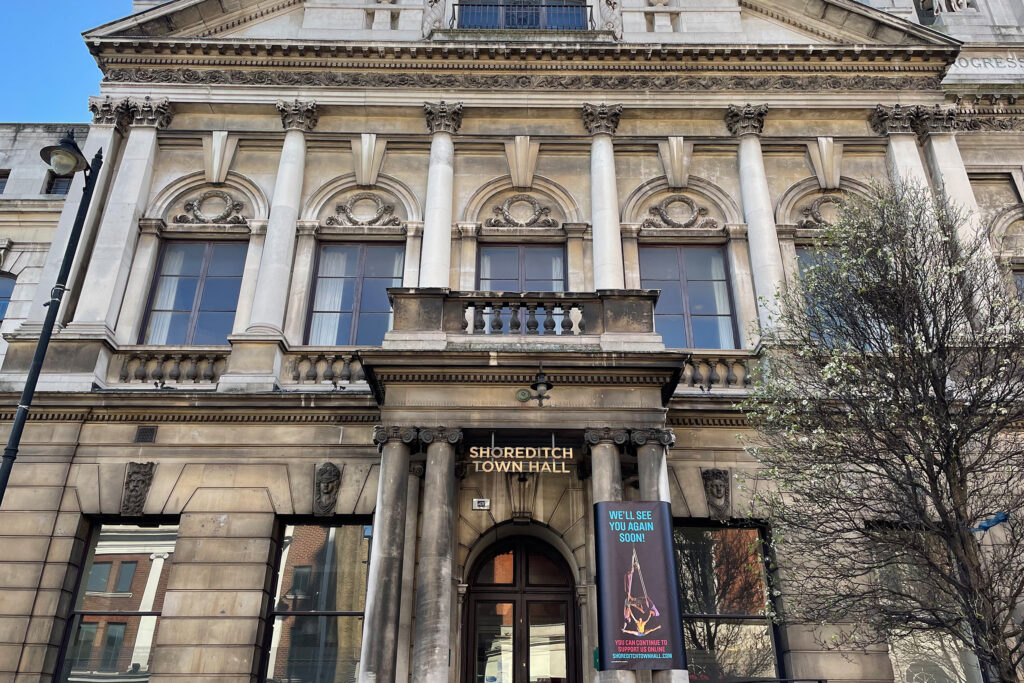
Shoreditch Town Hall's grimy Portland stone façade would benefit greatly from Styles Façade Solutions®' scaffold-free Façade Gommage cleaning process, which safely lifts ingrained pollution without damaging delicate carved details. This gentle, effective method would restore the building's original brightness while preserving its historic architectural character.
HOW STYLES FAÇADE SOLUTIONS CAN HELP
Styles Façade Solutions is uniquely positioned to provide expert stone cleaning services for Portland stone façades.
Having worked on some of London's most impressive stone façade buildings – including the Bank of England, Somerset House and Devonshire House – we provide a comprehensive suite of surveying and restoration services.
Our Façade Gommage cleaning process is the ideal solution for Portland stone. It offers a convenient and effective method to gently remove dirt and grime without the need to scaffold. The system uses ultrafine particles of chemically inert Aluminium silicate, which are projected under low pressure from a vacuum cabin (which is mounted on a hydraulic boom). The powder gently rubs away the build-up of dirt and grime to reveal the pristine surface below.
Ensuring that any building using this internationally recognised heritage stone is cleaned and maintained to extend the life of the building's façade, while also maintaining its impressive beauty.
Call our team TODAY on +44 (0) 20 8453 1494, alternatively use the contact us form for a FREE project quote, or for more information on how our stone cleaning services and Styles Façade Solutions® (formerly Thomann-Hanry®) can help clean and restore your commercial and heritage building's Portland stone façade.